
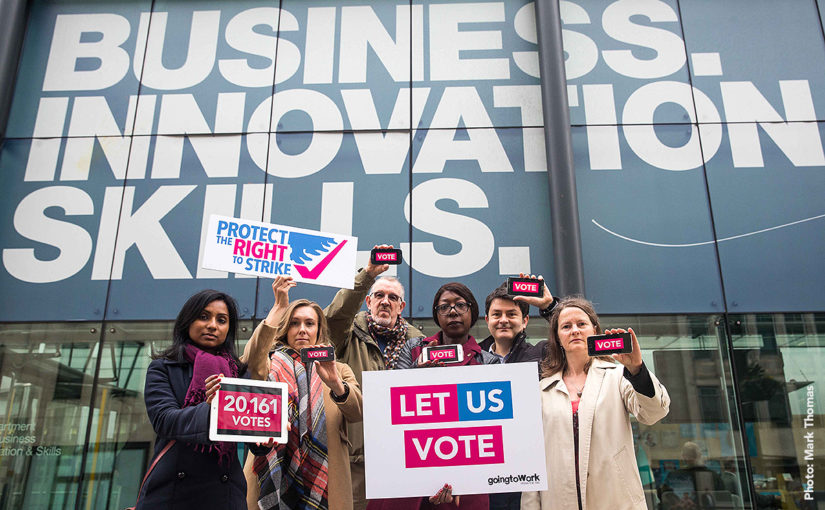
Online voting in union statutory elections has been a long time coming. The TUC launched our first campaign for eballoting in 2002, and unions started using it for non-statutory elections 25 years ago this year. Today, other organisations already make widespread use of the technology – from appointing boards for mutuals and NGOs, to electing Labour or Conservative party leaders.
But unions have so far been held back from using it by legislation. The Trade Union Act 1984 and 1992’s Trade Union and Labour Relations (Consolidation) Act mandated postal voting for strike votes, general secretary elections, union merger ballots and political fund ballots.
Many, do, however, frequently use online balloting for other votes not restricted by the law, such as whether to accept pay offers.
The 1999 Employment Relations Act added a power for the Secretary of State to issue regulations to permit alternative voting methods, rather than requiring a new Act of Parliament. But no such statutory instrument was ever issued.
That is about to come to an end, with the current government’s Make Work Pay programme, which promised:
“Labour will allow modern, secure, electronic balloting and workplace ballots, as political parties and listed companies use, while ensuring we maintain high standards of engagement and participation.”
Online balloting is not a part of the Employment Rights Bill itself but is closely tied to it. The last government’s Trade Union Act 2016 added complications by mandating a slow process of official trials before anything could change, as a result of its Knight Review.
However, when the Employment Rights Bill passes, it will strike out those provisions in the Trade Union Act. That means that online voting for unions can again become a matter purely for secondary legislation.
The Secretary of State will be able to issue an Order, with an accompanying code of practice. That’s something the current SoS, Jonathan Reynolds, has promised to bring forward. As he said in a ministerial statement in March:
“… we are committed to making balloting more accessible by delivering e-balloting, which we anticipate will increase participation in statutory ballots and demonstrate clear mandates.”
As things stand, the government has committed to consulting on online balloting towards the end of 2025, and implementing new measures in Spring 2026.
What difference could online balloting make for unions?
We talked to balloting officers from several unions that had already tried online or hybrid voting (posted ballot papers with an optional online return) in non-statutory ballots. They were hoping for a range of benefits from the introduction of online balloting for statutory ballots too.
Member experience
Moving away from postal-only could have a big benefit for member experience – making the process closer to members’ modern expectations.
Unions haven’t encountered problems for members in using online non-statutory votes. One told us that the number of members who contact the union to ask why voting has to be by post is actually a greater problem than the online system.
Members expect to be able to vote online and can find it anachronistic that they cannot do so, which they often blame on the union, not the law.
We heard that younger workers are much less likely to regularly use the postal system and convincing them to work out how to do it adds significant complication to a vote.
Raising turnout
Making it harder to use any process inevitably means a fall in the number of people who engage with it. Unions want to remove even small barriers to people taking part in our internal democracy – such as elections for general secretary or committees. These often get very low response levels, so moving to an easier system could make for a significant proportional increase in the level of participation.
Strike votes generally get a significantly higher turnout, so eballoting for them may be less urgent in that regard. However, unions still want to get as many people as possible to take part in big decisions.
Turnout will differ according to the method used and the electorate, but unions consistently reported increases in non-statutory ballot turnout with hybrid or online-only voting, as the process becomes quicker and simpler for the member.
Providing access
Some unions have significant numbers of mobile workers. This could include people working away from home for extended periods of time, for example those posted internationally with an employer, or who work in international transportation. Often they are not at home to receive post and can become disenfranchised.
One union told us of their initial concerns about the accessibility of online systems before their first online vote. They recruited volunteers to visit members who might have issues and help them. But these were not called upon, as the system provided by the scrutineer had a high degree of accessibility, especially for visually impaired workers. This made the default system more accessible for those workers than a postal alternative.
Liberalising the technologies permitted for voting would also allow unions to offer multiple routes to vote, depending on the access needs of members. For example, an online-first ballot with alternative methods such as telephone or postal voting for those who need it.
Improving processes
Lost postal ballots are always a problem, and unions have to contend with votes going missing or getting delayed in the post. Having the option of sending online ballot papers out where postal ones had been lost or mislaid would also be a lot easier for both the union and the member. This is especially important where members contact the union close to the end of the ballot, and it is hard to arrange replacement postal votes.
With online balloting, it’s possible to tell in many cases where members didn’t receive their voting pack, due to email bouncebacks. This data for successful receipt doesn’t exist in postal ballots, so online gives the union new information and a chance to rectify the problem.
Shorter balloting periods
The ability to conduct online-only votes in some situations could be valuable. Many strike ballots are only conducted with a few dozen members in the affected workplace. It is a much easier task to clean member data and ensure buy-in and participation of all members who want to do so, when the electorate is that small. In such cases, an online-only vote could be quicker and easier for the affected voters, compared to a postal ballot.
Ballots under current systems can take weeks, or even months from planning to result. That can make industrial disputes drag out unnecessarily, further damaging industrial relations. Negotiations may make progress, but can get stuck in a long term balloting process that becomes less relevant. Getting through the balloting process quickly would avoid energy lost in the dispute on both sides.
Cost savings
The costs of running a ballot can be very significant. Getting caught up in a national dispute can bring a high cost in balloting. And a general secretary or political fund ballot is always a major expense.
Postal voting with an online return would reduce costs for larger electorates, where the postage savings will outweigh the additional licensing costs for new balloting technology.
Moving to online-only, or online-first balloting would likely reduce costs significantly more, as the outward post is even more expensive than the return post. It needs a supporting pack of information to be printed and included, which adds a lot to the weight (and cost) for complex votes.
Deepening engagement
In Ireland, where online union ballots are legal, we heard from one union that online balloting has meant non-union workers engage significantly more with campaigns around strike votes and consultative pay ballots.
Digital systems mean it’s possible for a worker to join the union, receive a ballot and vote very quickly – sometimes even on the same day. This increase in engagement would often not be possible with the time lag caused by offline processes.
And once a member has been convinced to vote for the first time, they often feel more connected to union democracy and will be more likely to continue to exercise their vote in future elections. This effect could help compound turnout over time.
Reducing waste
Some unions are keen to reduce the production of printed packs that most people won’t use if they have the option. A lot of members are environmentally engaged and currently complain about the waste of resources in conducting postal ballots.
What’s next?
At the TUC, we’re engaging with the government over their plans, as they move into consultation and implementation.
If you’ve got any evidence you’d like us to include, or ideas for how you would like to be using online balloting after the changes, please do get in touch.