
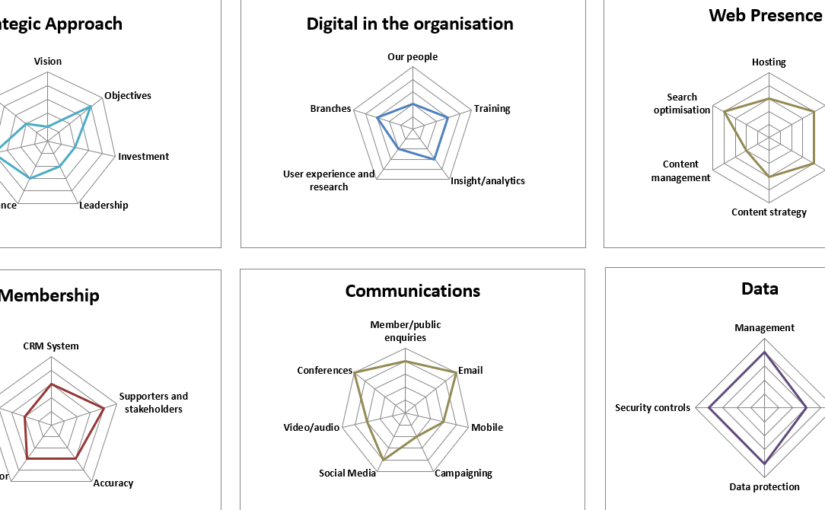
We’ve just released the latest major version of the TUC’s digital healthcheck tool, version 4.01. It’s been more than five years since our last version, so we wanted to revisit it and make some changes to reflect the fast-moving world of technology.
Continue reading TUC digital healthcheck v4 – A new version of our union benchmarking toolAuthor: John Wood
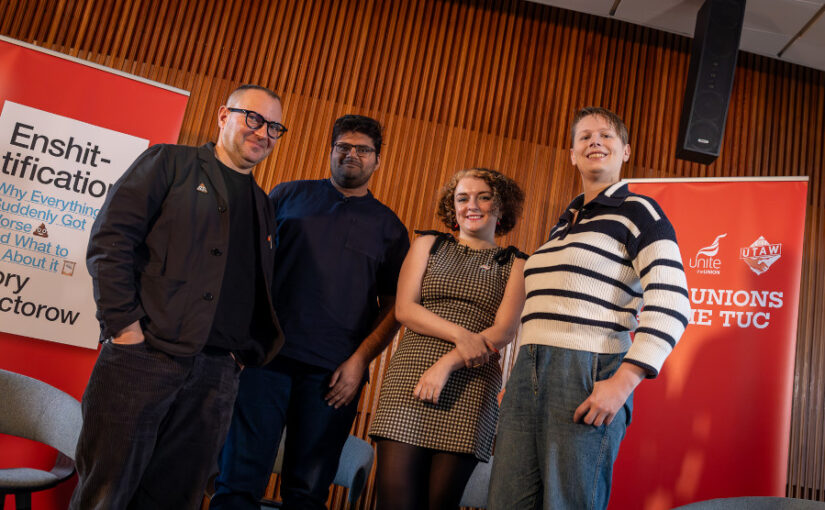
Tech unions vs enshittification
The internet is getting worse by the day. Platforms like Google, Facebook or Amazon are getting unusable – crammed with intrusive ads, user surveillance and AI slop content. Tech workers who used to add value for users are laid off to improve share prices. It’s all part of the big tech playbook to build monopolies, degrade user experience, exploit staff, and lock us into broken systems. Tech critic Cory Doctorow calls the process ‘enshittification’.
Back in November, we held a webinar with Cory and tech sector union activists from Prospect, UTAW and Unite, to explore how the concept of enshittification affects tech workers and users alike – and how unions have a big role in the fight back against Big Tech’s worst instincts.
Continue reading Tech unions vs enshittification
Building union power in the digital age: Lessons from Action Network’s Brian Young
Brian Young is the founder and director of Action Network – a progressive tech co-op that’s become a backbone for digital campaigning and organising across the US labour and progressive movements. It operates the Action Network campaign CRM internationally, and is currently about to offer its organising toolset Action Builder to Europe for the first time.
Brian’s experience spans decades of union and political campaigns and organising, so when we found he was passing through the UK, we were keen to get him in front of a room of union campaigners and organisers. Here’s a bit of what he told us.
Continue reading Building union power in the digital age: Lessons from Action Network’s Brian YoungVideo: Why and how unions should use phishing simulation
Phishing is the most common form of cyber attack, and in the last couple of years it’s been the starting point for some of the most damaging attacks on unions. Around the world and in the UK, unions have lost millions to scams, had their members’ personal data stolen, and been locked out of their own technology by ransomware.
Unions are particularly at risk. We have limited budgets and often operating on older tech. We have large caches of sensitive data. And as highly decentralised organisations, we’re uniquely exposed to the risks of shadow IT, with all the risks that brings.
Continue reading Video: Why and how unions should use phishing simulation
Email phishing simulation to keep unions safe
Cyber-crime is growing year on year in the UK. At the same time trade unions’ reliance on digital technology to operate effectively raises the stakes ever higher. If our computer networks are compromised by criminals, the results could be disastrous for our ability to operate, our finances, and the trust of our members.
Even with strong IT security systems, the weakest link is often in human mistakes made by staff and activists. People can be tricked into giving away access to systems and data. There is an ever-growing amount of scam email flowing into our unions at all levels, attempting to do that. This so-called “phishing” is the most common form of attack, but also the most common way for the most serious types of attacks to start out.
Continue reading Email phishing simulation to keep unions safeHow are unions using AI? What should our next steps be?
A year on from our first TUC Digital Lab workshop exploring how unions might make use of Artificial Intelligence, we got together again to take a deeper dive into the topic.
We were joined by Hannah O’Rourke of progressive digital network Campaign Lab to look at what unions had learned in the last year about whether and how they should develop internal usage of AI.
Continue reading How are unions using AI? What should our next steps be?Building a pro-worker AI innovation strategy
The TUC’s Adam Cantwell-Corn sets out the building blocks for a pro-worker AI innovation strategy for the UK. If we want to see shared prosperity rather than unmanaged job displacement and entrenching inequality, then centering workers’ expertise and concerns in innovation will be the best chance to forge a positive path for AI and its impacts on workers, communities and society at large.
Continue reading Building a pro-worker AI innovation strategy
Data visualisation for trade unions
We all aspire to ground our decisions in real data where possible, giving our unions’ activities the greatest chance of success. But in reality, there are often barriers to achieving this.
Unions have lots of data, but it may be trapped in systems that few people can access. Sometimes data is paper based, in files held by individuals, or not networked. Where we do have reports, these can be siloed, too brief, too rigidly formatted, and unable to tell us the full picture. Or the raw data can be too complex for staff and reps with more limited data skills to be able to work with.
Continue reading Data visualisation for trade unions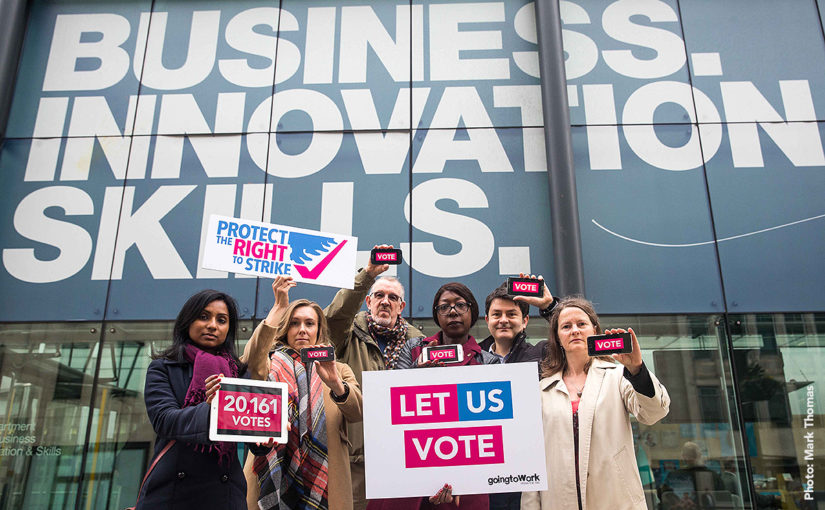
Online balloting moves closer for unions
Online voting in union statutory elections has been a long time coming. The TUC launched our first campaign for eballoting in 2002, and unions started using it for non-statutory elections 25 years ago this year. Today, other organisations already make widespread use of the technology – from appointing boards for mutuals and NGOs, to electing Labour or Conservative party leaders.
But unions have so far been held back from using it by legislation. The Trade Union Act 1984 and 1992’s Trade Union and Labour Relations (Consolidation) Act mandated postal voting for strike votes, general secretary elections, union merger ballots and political fund ballots.
Continue reading Online balloting moves closer for unionsAI demystified
Simon Sapper and Martin Smith’s organising podcast Organising For A Change talks with the TUC’s Adam Cantwell-Corn about why and how union members should engage in the adoption of AI in their workplaces.
Continue reading AI demystified